
Camino
Camino de Santiago from Saint-Jean-Pied-de-Port — stage by stage
Camino Francés guide from Saint-Jean-Pied-de-Port: how to prepare, the legendary Stage 1 to Roncesvalles, what to pack and the stages that follow.
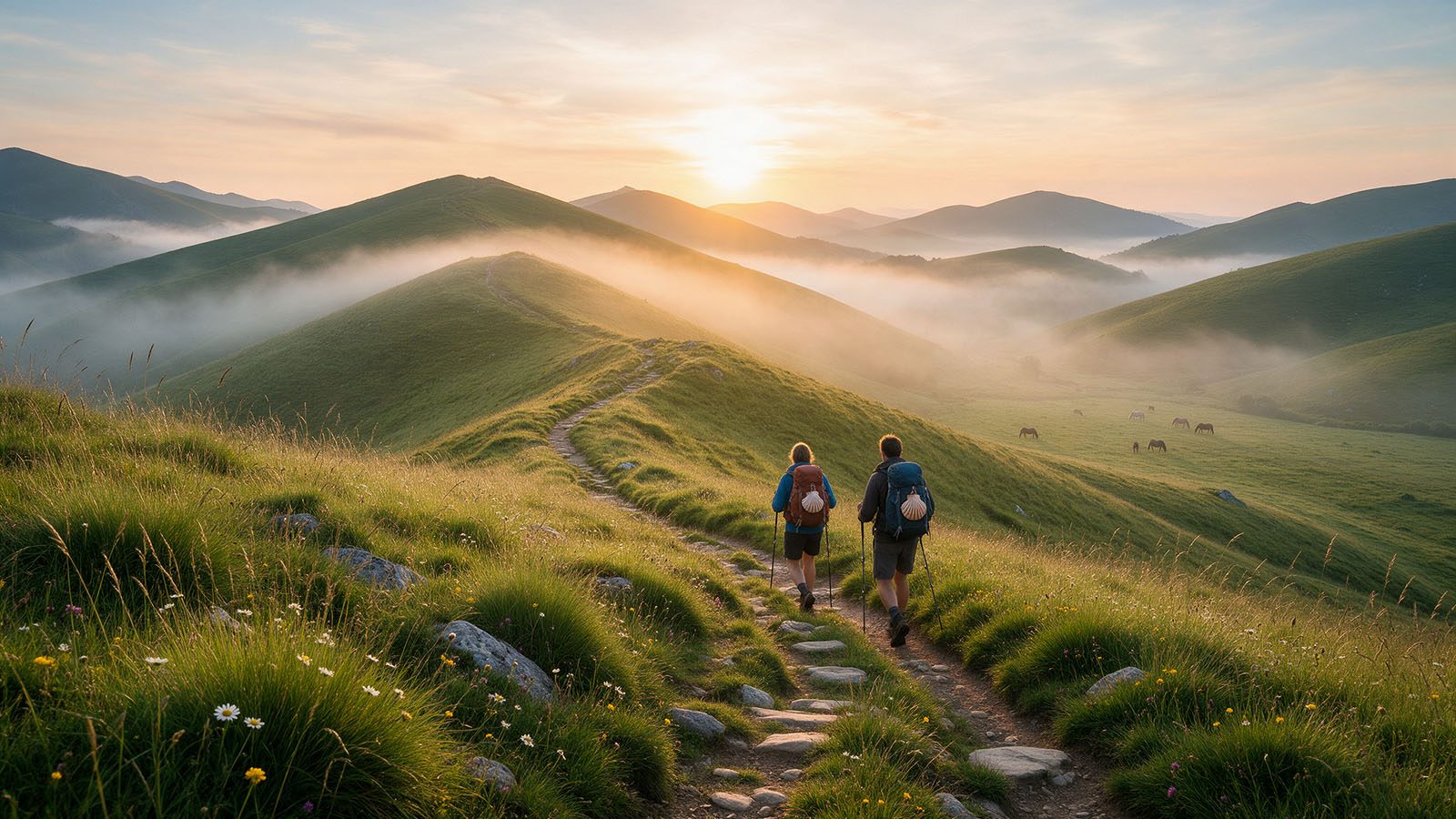
Around 55,000 pilgrims a year pass through the pilgrim office in Saint-Jean-Pied-de-Port, Donibane Garazi in Basque (58,451 in 2024, around 54,100 in 2025). The town is the main starting point of the Camino Francés (the French Way) to Santiago de Compostela. Ahead of the pilgrims lie some 790 km, usually split into about thirty stages. But first comes Stage 1 — the stage of all stages — which crosses the Pyrenees and ends at Roncesvalles, in Navarre.
Here’s everything you need to know to prepare for it, make the most of it and carry on beyond it.
Why start from Saint-Jean-Pied-de-Port
Three reasons:
-
The symbolic starting point. The three French routes from Tours, Vézelay and Le Puy meet shortly before, at the Gibraltar stele (near Saint-Palais, or Donapaleu), then arrive together in Saint-Jean-Pied-de-Port before the crossing of the Pyrenees.
-
The most intense stage. Crossing the Pyrenees on foot is the stuff of legend.
-
The town itself is worth the trip, even if you’re not setting off: ramparts, citadel (17th century, remodelled after Vauban), St James’s Gate (Porte Saint-Jacques).
Arriving the day before (or a day ahead) gives you time to explore the town and rest before the stage.
Preparing your Camino
The pilgrim passport (credencial)

Essential if you want to sleep in albergues (pilgrim hostels). You can pick one up at the pilgrim office in Saint-Jean-Pied-de-Port (39 rue de la Citadelle) or from a Camino association before you leave.
Along the way you get it stamped (albergues, churches, tourist offices…). These stamps will prove in Santiago that you really did walk the Camino — which is compulsory for the Compostela (the official certificate).
Rucksack and kit
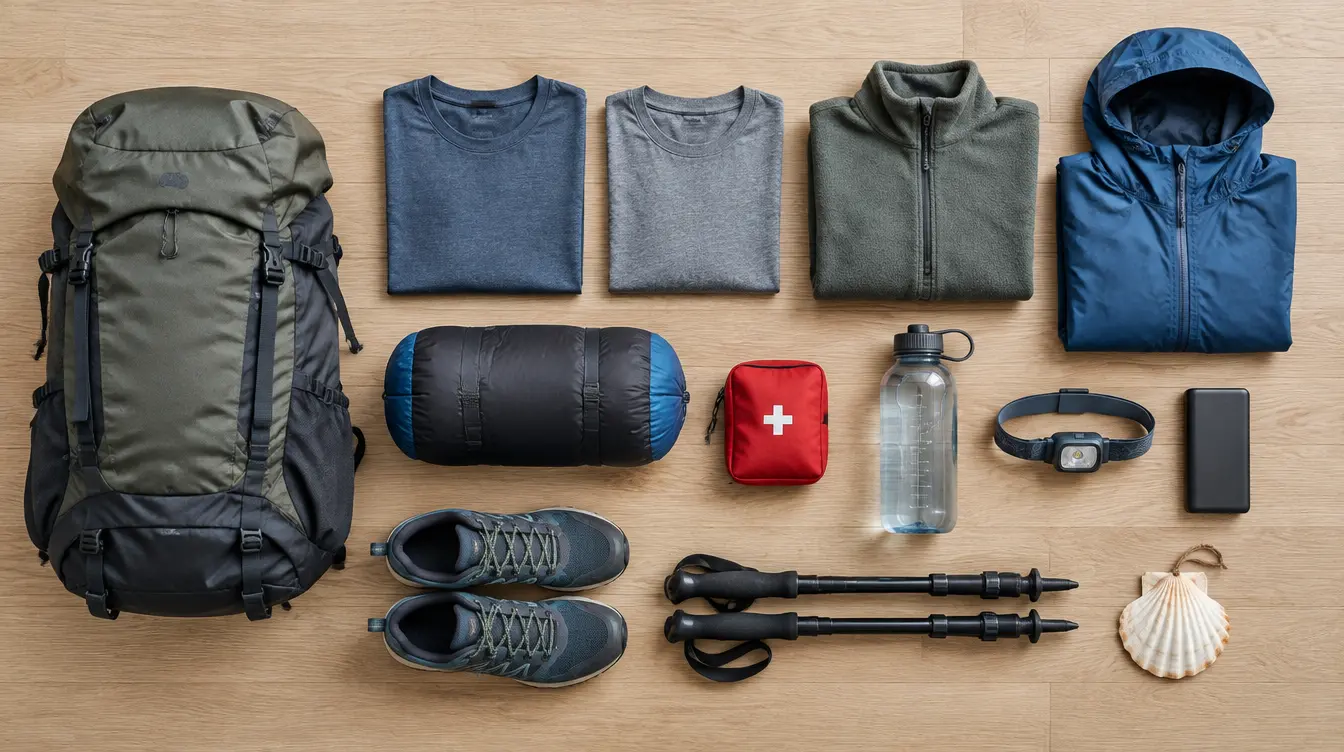
Essential kit:
- Rucksack 35–45 L, with hip belt and back straps
- Lightweight walking boots or trail shoes, broken in (2 months' use before you leave)
- 2 pairs of technical socks, anti-blister
- 2 technical T-shirts, merino or polyester
- 1 pair of lightweight walking trousers + 1 pair of shorts
- 1 lightweight fleece + 1 waterproof jacket (windproof)
- 1 lightweight sleeping bag (100–200 g, to use with albergue duvets)
- Minimalist wash bag (solid soap, brush, toothpaste)
- First-aid kit: Compeed blister plasters, ibuprofen, antiseptic, plasters
- 1 water bottle or 2 L hydration system
- Head torch, power bank for your smartphone
- Walking poles — recommended for Stage 1
Ideal total weight: 7–9 kg.
Fitness
Start training 2–3 months ahead with:
- Long walks (15–20 km) once a week
- Stairs with a loaded rucksack
- Quad strengthening (the descents are murder on your knees)
You don’t need to be an athlete. It’s more about mindset and consistency than physical fitness.
Stage 1 — Saint-Jean-Pied-de-Port → Roncesvalles
The legendary stage of the Camino Francés. About 25 km and more than 1,300 m of ascent via the Napoleon Route: you cross the Pyrenees, reach the high point at the Col de Lepoeder (1,429 m), then drop down to Roncesvalles (about 950 m). It’s a true initiation.
Two possible routes
The Napoleon Route (over the ridges)
- Distance: about 25 km
- Waypoints: Huntto (about 490 m), the Orisson refuge (about 790 m, around km 8), Col de Bentarte (1,344 m, on the France–Spain border), Roland’s Fountain, Col de Lepoeder (1,429 m, the high point)
- Closed on the Navarrese side from 1 November to 31 March (by order of the Government of Navarre, with fines and rescue costs if you ignore the ban)
- Spectacular views, a high-mountain feel
The Valcarlos route (along the valley)
- Distance: about 23 km
- Goes over the Ibañeta Pass (1,057 m), with its chapel
- Open all year round, and the compulsory route in winter
- Also used in bad weather
Danger points
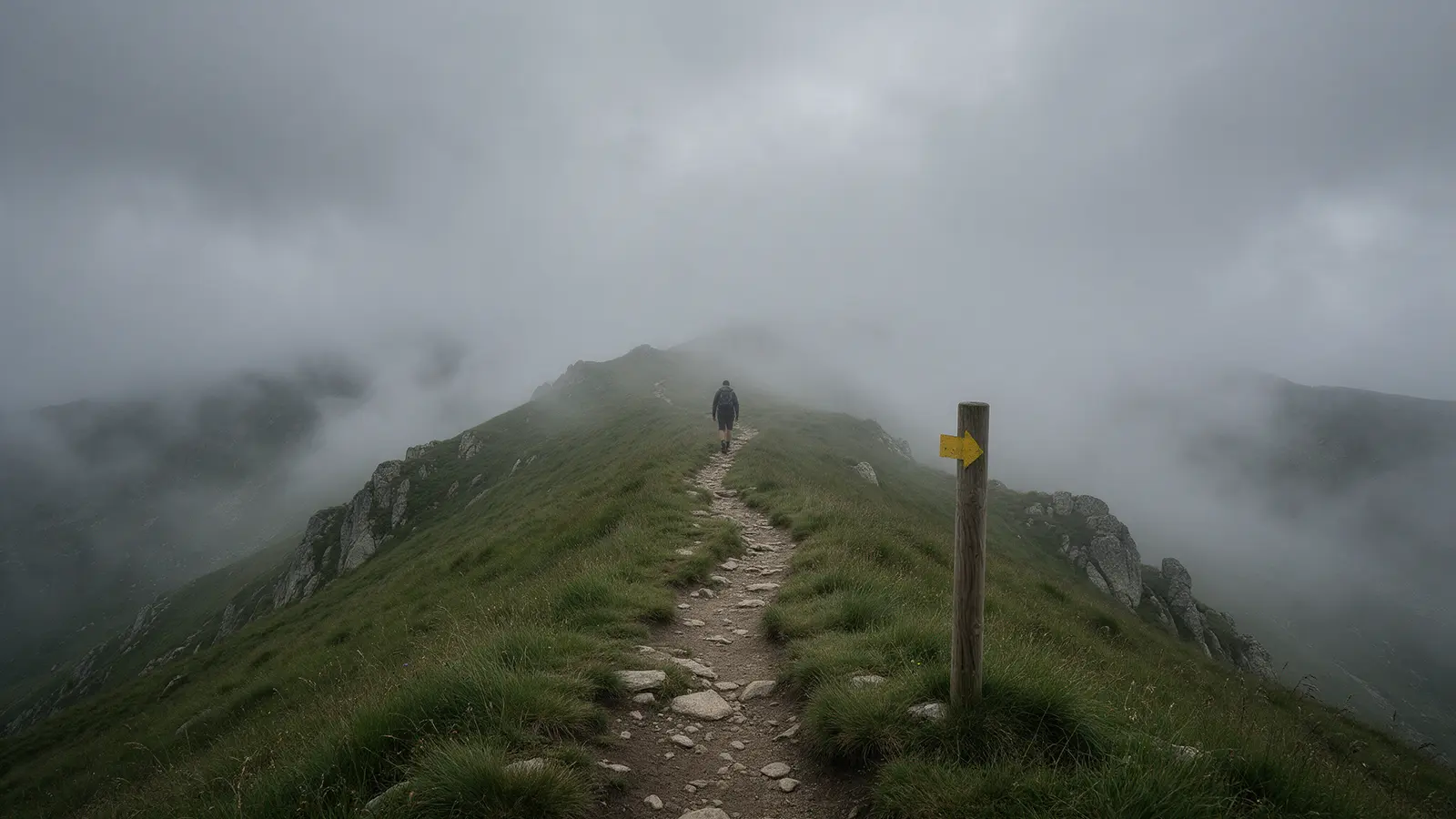
Water: set off with enough supplies; water points are few and far between and may be turned off late in the season. Food: bring enough to eat for the whole day. Setting off: early in the morning in summer.
Where to sleep in Roncesvalles
Roncesvalles pilgrim hostel (albergue) — housed in the buildings of the Royal Collegiate Church (Real Colegiata), opened in 2011, 183 beds. Booking recommended.
After a stage like that, a hot shower and a clean bed are worth their weight in gold.
The next stages
Stage 2: Roncesvalles → Zubiri (about 21.5 km)
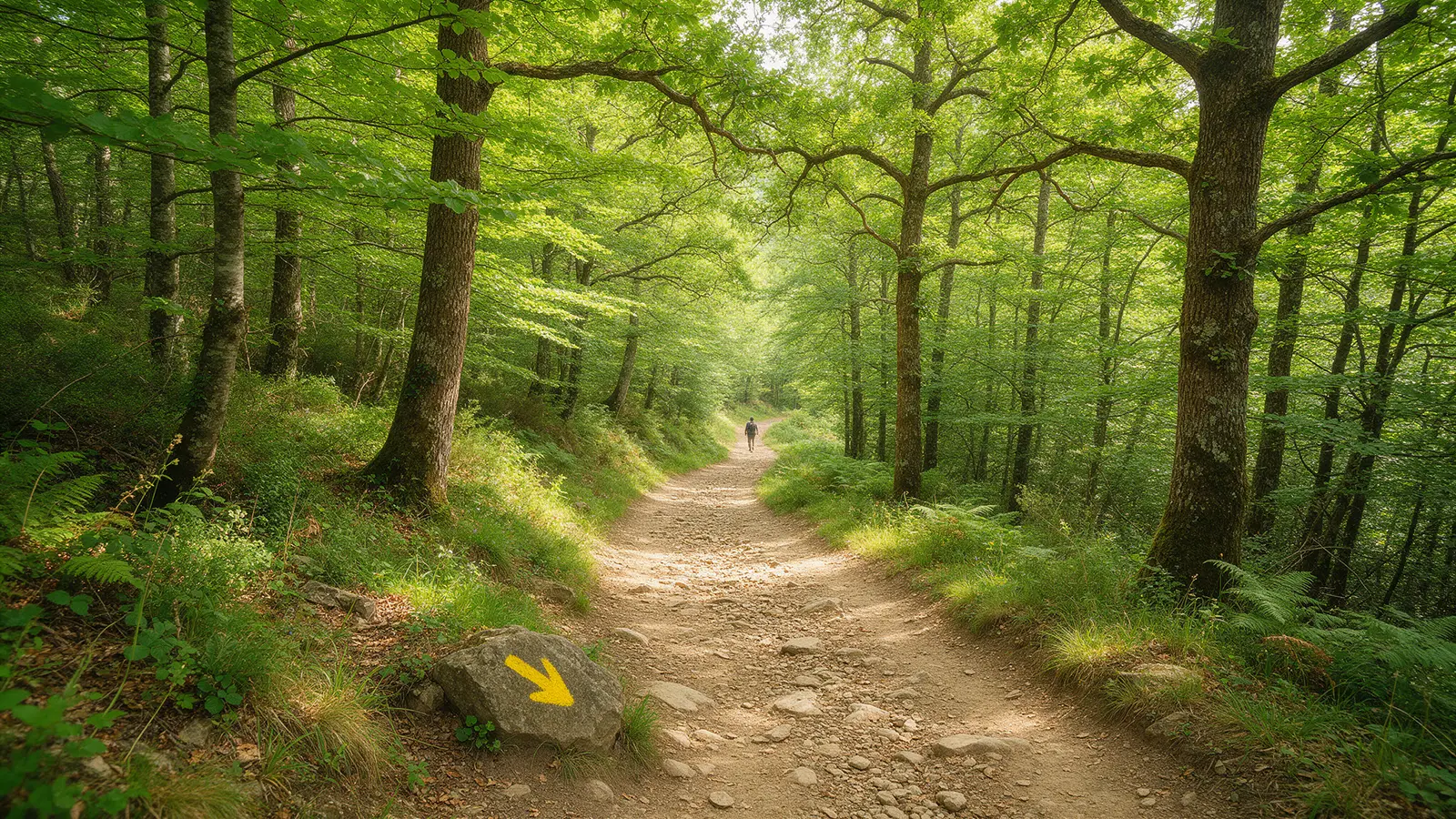
A downhill path through woodland, then along the valley. A gentler stage after Stage 1.
Stage 3: Zubiri → Pamplona (Iruñea) (about 20 km)
Down into the Pamplona basin. You enter the old town through the Portal de Francia (also called the Zumalacárregui Gate). Pamplona is the first big city on the Camino Francés.
See our full guide to Pamplona.
Stage 4: Pamplona → Puente la Reina (about 24 km)
Over the Alto del Perdón (770 m), with its sheet-metal pilgrim monument and its wind turbines. Then down to Puente la Reina and its medieval bridge.
Beyond
The Camino Francés continues all the way to Santiago, crossing La Rioja, the Castilian plateau, El Bierzo and finally Galicia.
Frequently asked questions
When should I go?
March–April: lush greenery, flowers in bloom, fewer crowds, but it can be cool and rainy. May–June: ideal, with mild temperatures and the paths open. July–August: hot (especially on the Meseta), crowds in Saint-Jean-Pied-de-Port and Roncesvalles. September–October: the second-best time, and quieter. November–March: wintry, Napoleon Route closed (1 November–31 March), a solitary feel.
Can you walk the Camino in one go or in sections?
Both are possible: many pilgrims walk it in sections, over several years.
What’s the minimum distance for the Compostela?
You need to cover 100 km on foot (200 km by bike) along a single route to the cathedral to receive the Compostela. Many people start from Sarria (Galicia) to walk the last 100 km.
Can I bring a dog?
It’s possible but complicated: find out in advance which places to stay accept pets.
What should I do once I reach Santiago?
Attend the pilgrims' Mass at the cathedral. Collect your Compostela from the pilgrim office. You might also carry on to Fisterra (Cape Finisterre) to round things off symbolically.
Useful links
- Town guide: Saint-Jean-Pied-de-Port
- Town guide: Pamplona (Iruñea)
- Province guide: Lower Navarre (Nafarroa Beherea)
- Province guide: Navarre (Nafarroa)
Buen Camino — have a good journey.