At a glance
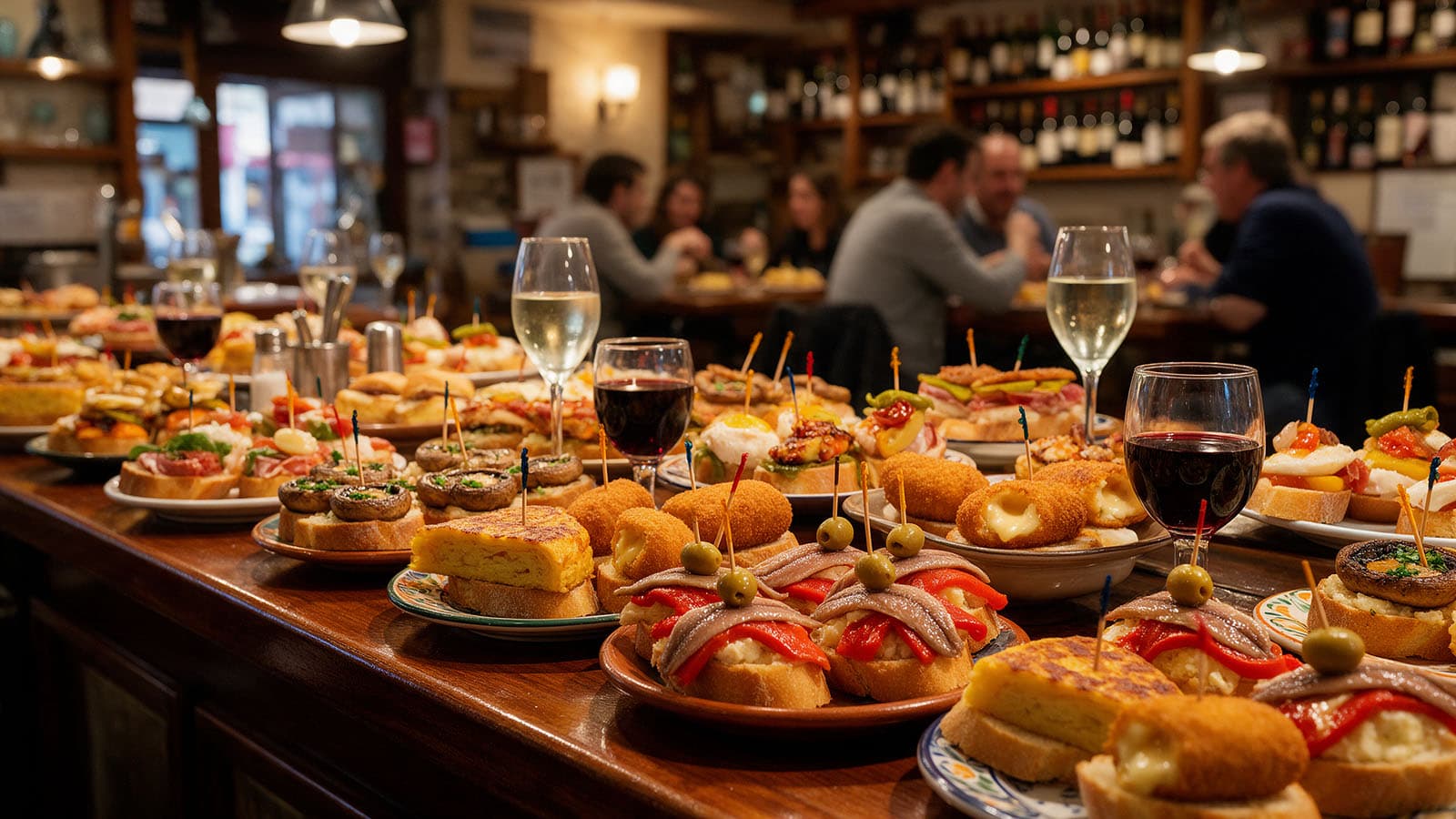
Gipuzkoa (Guipuscoa in French) is the smallest province in Spain (about 2,000 km²) and has about 733,000 inhabitants (2025), some 365 people per km². Its capital, San Sebastián (Donostia in Basque, Saint-Sébastien in French), is known for its shell-shaped bay — La Concha, regularly ranked among the most beautiful city beaches — and for its food: three three-Michelin-star restaurants in 2026 (Arzak and Akelarre in San Sebastián, Martín Berasategui in Lasarte-Oria) and countless pintxo bars.
It is also an industrial heartland: this is where the Mondragon cooperative group was born (1956, in Mondragón — Arrasate in Basque), as were the couturier Cristóbal Balenciaga (Getaria), the navigator Juan Sebastián Elcano (Getaria) and Ignatius of Loyola (Azpeitia). The mountainous terrain runs right down to the ocean.
A little history
- Antiquity: the territory is inhabited by the Varduli.
- 11th–14th centuries: the province takes shape around small towns (San Sebastián was founded around 1180 by Sancho VI of Navarre).
- 15th–16th centuries: golden age of Gipuzkoan seafarers. Juan Sebastián Elcano of Getaria completes the first circumnavigation of the globe in 1522 (after Magellan’s death in the Philippines).
- 1728–1785: the Real Compañía Guipuzcoana de Caracas (Royal Guipuzcoan Company of Caracas), based in San Sebastián, holds the monopoly on trade between Spain and Venezuela.
- 1813: after the assault of 31 August, San Sebastián is sacked and burnt by British and Portuguese troops. Only the street leading to Santa María (today’s Calle 31 de Agosto) is spared.
- Mid-19th century: Queen Isabella II begins spending her summers in San Sebastián; the regent Maria Christina later makes it the court’s summer residence (Miramar Palace, 1893).
- 1863: San Sebastián’s walls are demolished, paving the way for the Cortázar ensanche (new town extension).
- 1956: in Arrasate/Mondragón, the priest José María Arizmendiarrieta and his former students found Ulgor, the first cooperative of what would become the Mondragon group.
- Late 20th century: San Sebastián establishes itself as a leading food destination.
- 2016: San Sebastián is European Capital of Culture (alongside Wrocław).
Must-see sights
- La Concha in San Sebastián — a crescent-shaped beach with its 1910 railing, Monte Igueldo at one end and Monte Urgull at the other.
- Parte Vieja (old town) — rebuilt after 1813, a maze of narrow streets and the epicentre of pintxos.
- Basilica of Santa María — a Baroque basilica completed in 1774.
- Monte Urgull — Mota Castle, the statue of Christ, panoramic views.
- Monte Igueldo — funicular and amusement park, both opened in 1912.
- Miramar Palace — former summer residence of the royal family, with gardens open to the public.
- San Sebastián Aquarium.
- San Telmo Museum — the history of Basque society, in a former 16th-century Dominican convent.
- Kursaal — Rafael Moneo’s conference centre (1999), the main venue of the Film Festival (Zinemaldia).
- Getaria — birthplace of Elcano and Balenciaga, the Cristóbal Balenciaga Museum, txakoli.
- Zumaia — flysch: rock strata recording more than 60 million years of Earth’s history (Basque Coast Geopark, together with Deba and Mutriku).
- Hondarribia — a fortified border town, with the Marina quarter and its colourful balconies, and ramparts.
- Zarautz — a 2.8 km beach, the longest in the Spanish Basque Country, and a surfing hotspot.
- Loyola (Azpeitia) — the sanctuary of Ignatius of Loyola, founder of the Jesuits.
- Chillida-Leku Museum (Hernani) — works by Eduardo Chillida around the Zabalaga caserío (farmhouse) and in its gardens.
- The Comb of the Wind (Chillida, 1976) — sculptures at the far end of Ondarreta beach, where the waves crash in rough seas.
Main towns
- San Sebastián (Donostia) — La Concha, pintxos, Zinemaldia
- Hondarribia — fortified border town
- Zarautz — surfing and txakoli
- Getaria — Balenciaga, Elcano, PDO txakoli
- Zumaia — flysch and film
- Tolosa — carnival, Saturday market
- Irun — the border, the Bidasoa
Must-try food and drink
- Pintxos — the classic bar crawl through San Sebastián’s Parte Vieja.
- Getaria txakoli (DO Getariako Txakolina)
- Chuletón / txuleta — grilled beef rib steak
- Hake kokotxas al pil-pil
- Marmitako — tuna and potato stew
- Cider (sagardoa) — the sidrería (cider house) tradition, in season from January; the classic menu is salt cod omelette, fried salt cod and txuleta.
- Idiazabal cheese (DO since 1987) — raw milk from Latxa sheep, smoked or unsmoked
Living traditions
- San Sebastián’s Tamborrada — from midnight on 19 January to midnight on 20 January, thousands of drummers parade in Napoleonic-era uniforms or chef’s whites. The parade is said to have begun in the 1830s as a parody of military drills.
- Zinemaldia — the San Sebastián International Film Festival, founded in 1953 and ranked among the major competitive festivals (FIAPF category A). In September.
- Bandera de la Concha — a trainera (traditional rowing boat) regatta on the first two Sundays of September, with eight crews in two heats.
- Sidrerías — from January, it is ‘txotx’ season in the cider houses.
- The children’s Tamborrada — on the morning of 20 January, since 1927.
Curiosities and anecdotes
- Three three-Michelin-star restaurants in Gipuzkoa (2026 Guide), two of them in San Sebastián.
- Txotx: ‘txotx’ is the cry that goes up in cider houses, inviting everyone to help themselves from the barrel.
- Cristóbal Balenciaga was born in Getaria in 1895, the son of a sailor and a seamstress. His museum stands next to the Aldamar Palace, residence of the Marquises of Casa Torres, who supported him in his early days.
- Monte Igueldo has had an amusement park since 1912; its Montaña Suiza (1928) is still running.
- The Comb of the Wind (Peine del Viento) by Chillida: 3 steel sculptures (1976) at the far end of Ondarreta beach. In rough seas, the waves crash over them.
Photographing Gipuzkoa
- La Concha in the early morning — untouched sand, low sun, total calm
- The Comb of the Wind in a raging sea — towering waves, sea spray
- The flysch from Zumaia to Deba — clifftop path, sunset
- San Sebastián’s Casco Viejo at pintxo time — buzzing atmosphere, warm light
- Getaria from the sea — the ‘mouse’ (Monte San Antón) and the village clinging to the hillside
- Hondarribia, Marina quarter — colourful balconies
- The view from Monte Igueldo — a complete panorama of the bay
- Zarautz from the promenade — 2.8 km of sand and waves