
Travel
Basque Country 7-day itinerary — what to do in a week (2026)
A day-by-day itinerary for a week in the Basque Country: both sides of the border, beaches, mountains, villages and museums. Transport and tips.
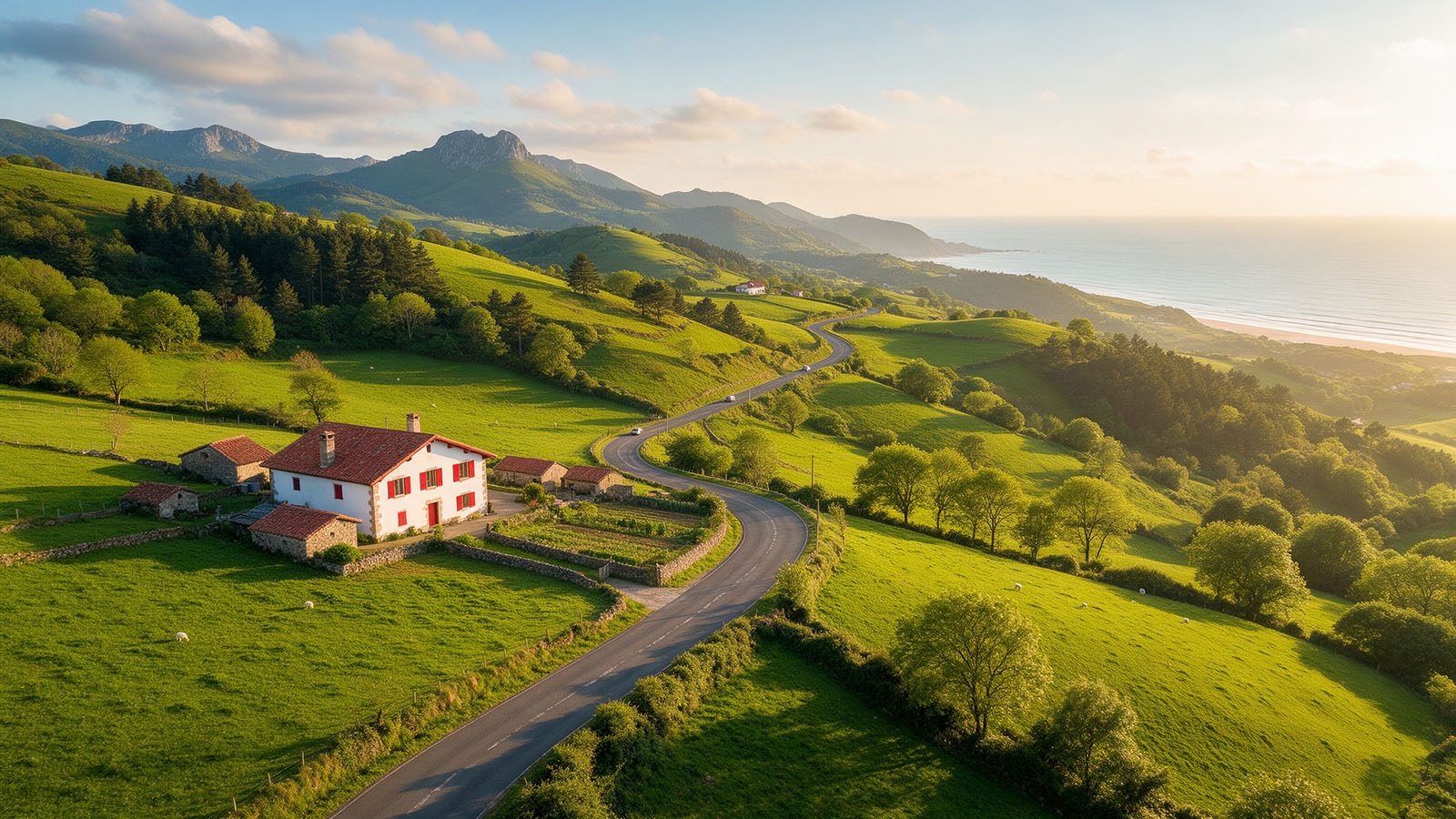
The Basque Country (Euskal Herria) is compact but remarkably varied: Atlantic beaches and the Pyrenees, two countries, seven provinces. Seven days is enough to get a good feel for it.
Here is a day-by-day itinerary, from Biarritz to the coast of Gipuzkoa.
The trip in 7 lines
- Day 1 — Biarritz: beach, Rocher de la Vierge, atmosphere
- Day 2 — Bayonne: chocolate, cathedral, ham
- Day 3 — Sare, La Rhune (Larrun), Espelette
- Day 4 — Saint-Jean-de-Luz and the border
- Day 5 — San Sebastián (Donostia): pintxos and La Concha
- Day 6 — Bilbao: the Guggenheim and the Casco Viejo
- Day 7 — Getaria, Zumaia and back
Day 1 — Biarritz: arrival and first impressions
Arrival Via Biarritz airport, or by TGV high-speed train from Paris.
Plan for the day
- A walk out to the Rocher de la Vierge
- The Grande Plage and its casino
- The lighthouse and its views
- The Port des Pêcheurs (fishermen’s harbour) and the Côte des Basques; since the late 1950s, Biarritz has been one of Europe’s great surfing hotspots
- The Hôtel du Palais, originally a palace built for Empress Eugénie
Overnight in Biarritz
Day 2 — Bayonne: culture and food
Plan for the day
- Biarritz → Bayonne
- The Halles de Bayonne covered market, on the banks of the Nive
- Sainte-Marie Cathedral and its cloister
- The Musée Basque (Basque Museum)
- Bayonne chocolate, a centuries-old tradition, and Bayonne ham
- A walk along Vauban’s ramparts
- The Petit Bayonne quarter
Overnight in Bayonne, or back to Biarritz.
Day 3 — Sare, La Rhune and Espelette
Plan for the day
- Head for the Col de Saint-Ignace, on the road between Sare and Saint-Jean-de-Luz
- The little La Rhune train up to the summit (905 m)
- Sare and its caves, occupied as far back as the Aurignacian
- Espelette: PDO (AOP) peppers hung out to dry on the façades in summer; the pepper festival on the last Sunday in October; the church of Saint-Étienne (16th century)
Overnight in Espelette, or back to Biarritz.
Day 4 — Saint-Jean-de-Luz and across the border
Plan for the day
- Saint-Jean-de-Luz: the church of Saint-Jean-Baptiste (where Louis XIV married in 1660) and the Maison Louis XIV
- The covered market (Les Halles) and the harbour, facing Ciboure
- On to Hendaye
- Across to Hondarribia: by shuttle boat from Hendaye, or by road via Irun
- A stroll through Hondarribia’s fortified old town (the castle of Charles V, now a parador) and the Marina district
Overnight in Hondarribia
Day 5 — San Sebastián: pintxo capital
Plan for the day
- Hondarribia → San Sebastián
- A walk along La Concha to Eduardo Chillida’s Peine del Viento (Comb of the Wind), at Ondarreta
- Monte Igueldo, reached by funicular, with its amusement park and views
- A pintxo crawl in the Parte Vieja (old town)
- The San Telmo Museum (Basque culture and history), at the foot of Monte Urgull
- Monte Urgull — views over the bay
- The Kursaal, facing Zurriola beach
San Sebastián is one of the cities with the most Michelin stars per head of population in the world: if you want a top-flight restaurant, book well in advance.
Overnight in San Sebastián
Day 6 — Bilbao: the Guggenheim and pintxos
Plan for the day
- San Sebastián → Bilbao
- The Guggenheim Museum (Frank Gehry, opened in 1997), with Jeff Koons' Puppy out front
- A walk along the ría (estuary) — Santiago Calatrava’s Zubizuri footbridge (1997)
- The Casco Viejo and its Seven Streets (Zazpikaleak)
- La Ribera Market (opened in 1929)
- The Cathedral of St James (Santiago)
- A pintxo crawl in the Casco Viejo
Overnight in Bilbao
Day 7 — The Gipuzkoa coast and back
Plan for the day
- Bilbao → Getaria, birthplace of Juan Sebastián Elcano
- The Cristóbal Balenciaga Museum
- Monte San Antón, nicknamed ‘the mouse of Getaria’ because of its shape
- Getaria is famous for its grilled fish and its txakoli (Getariako Txakolina designation)
- Zumaia: the flysch cliffs of Itzurun beach
- Back to Biarritz
Alternatives — themed versions
Surf version
Swap some of the culture days for surf sessions, in Biarritz for example.
Family version with children
Add the Biarritz Aquarium, the Sare caves and the little La Rhune train.
Getting around
Car — the most practical option for this route. Motorways: the A63 (France) and the AP-8 (Spain).
Train — handy for the coastal towns, much less so for inland villages such as Sare or Espelette.
Bus — local networks serve both sides of the border.
Frequently asked questions
Can I do this itinerary in 5 days?
Yes, by dropping Bilbao and Getaria/Zumaia (days 6–7). It’s better to see fewer places in more depth.
Do I need to hire a car?
Recommended for this route, especially for Sare and Espelette.
What language do people speak?
French and Basque in the north (Iparralde), Spanish and Basque in the south (Hegoalde).
Can I do this itinerary in winter?
Yes, the route is still doable; pack waterproofs.
Useful addresses, town by town
You’ll find all the detailed addresses in our town guides:
- Biarritz · Bayonne · Sare · Espelette · Saint-Jean-de-Luz
- Hondarribia · San Sebastián · Getaria · Zumaia
- Bilbao
Bidaia on — Have a good trip.