
Nature
Whale and dolphin watching in the Basque Country — where to go (2026 guide)
Dolphins, pilot whales, fin whales and sperm whales in the Bay of Biscay: boat trips from Hendaye, Bermeo and Santurtzi, season, species, prep and etiquette.
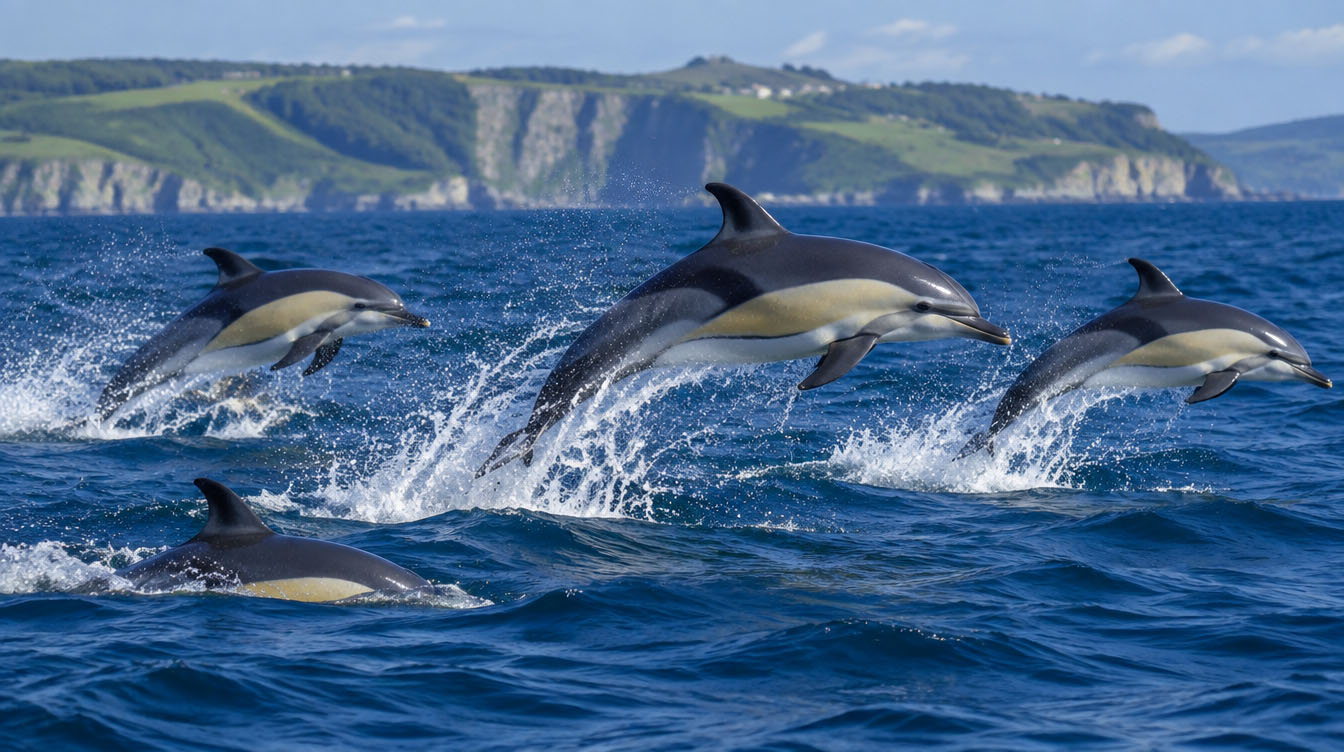
Off the Basque coast, the Bay of Biscay plunges to a depth of 4,735 m. Around thirty species of marine mammals live here: 28 species have been recorded at sea. Dolphins, pilot whales, rorquals and even sperm whales can be spotted on boat trips. Here is where to go, when, and how to prepare.
Why the Bay of Biscay?
In the south of the bay, the seabed is cut through by submarine canyons. The best known, the Capbreton Canyon (gouf de Capbreton), is more than 4,000 m deep: this is where many cetaceans congregate, and it is where the trips from Hendaye head for. On the Spanish side, trips from Bermeo explore another submarine canyon, north of Cape Matxitxako.
When to go
The whale-watching season runs from April to October, according to Turismo Euskadi and the operators on the French coast alike.
Where to set sail
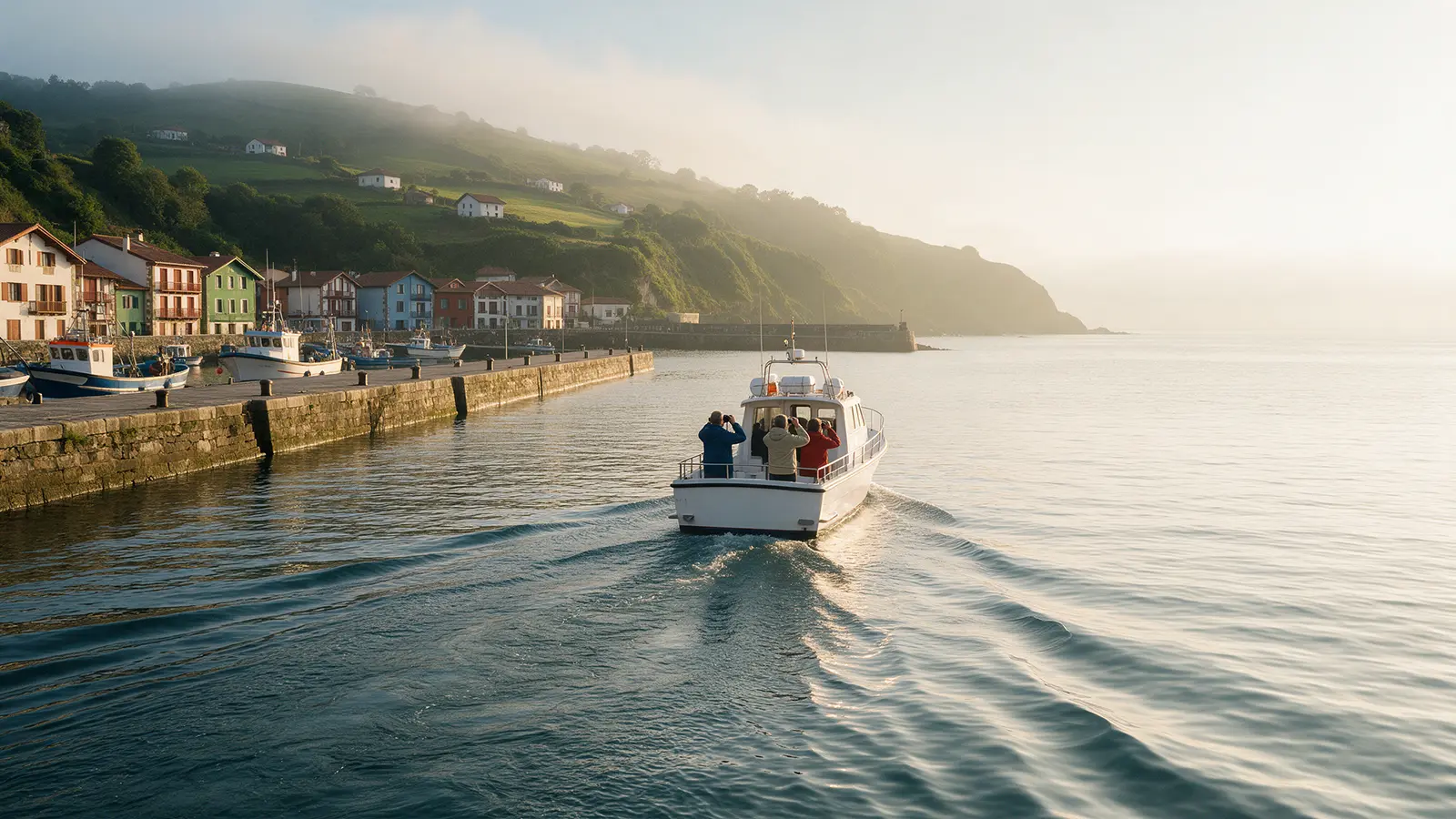
From Hendaye (French side)
The operator Explore Océan runs a 7 hr 30 min ‘Cetacean Expedition’ (Expédition cétacés) at sea from Hendaye harbour, heading for the Capbreton Canyon, from April to October, for ages 5 and over. The operator says it is the only one in France certified for ‘Responsible Whale Watching’ by the World Cetacean Alliance, and reports a sighting rate of over 90%. Its charter: an approach adapted to the animals' behaviour, limited observation time, no swimming with or feeding the animals, and zero single-use plastic. See Hendaye.
From Bermeo (Biscay)
Bermeo is the main departure port on the Spanish side, with companies such as Verballenas and Hegaluze. Trips explore the canyon north of Cape Matxitxako. Several formats are available, according to Turismo Euskadi:
| Trip | Duration | When |
|---|---|---|
| Classic route | 4 hrs 30 mins | Saturdays, suitable for families |
| ‘Pro’ route | 6 hrs | Some Saturdays |
| Long route | 8 hrs | Several dates from July to October |
These trips also support research: scientists use them to collect data on cetaceans. In Bermeo, the company Mako Pako even offers dives to see blue sharks, with no diving qualification required.
From Santurtzi (Biscay)
Boat trips also leave from Santurtzi, near Bilbao, in search of whales, sperm whales, beaked whales and orcas.
Species to look out for
Dolphins and pilot whales (the most common)
- Common dolphin (Delphinus delphis).
- Bottlenose dolphin (Tursiops truncatus).
- Striped dolphin (Stenella coeruleoalba).
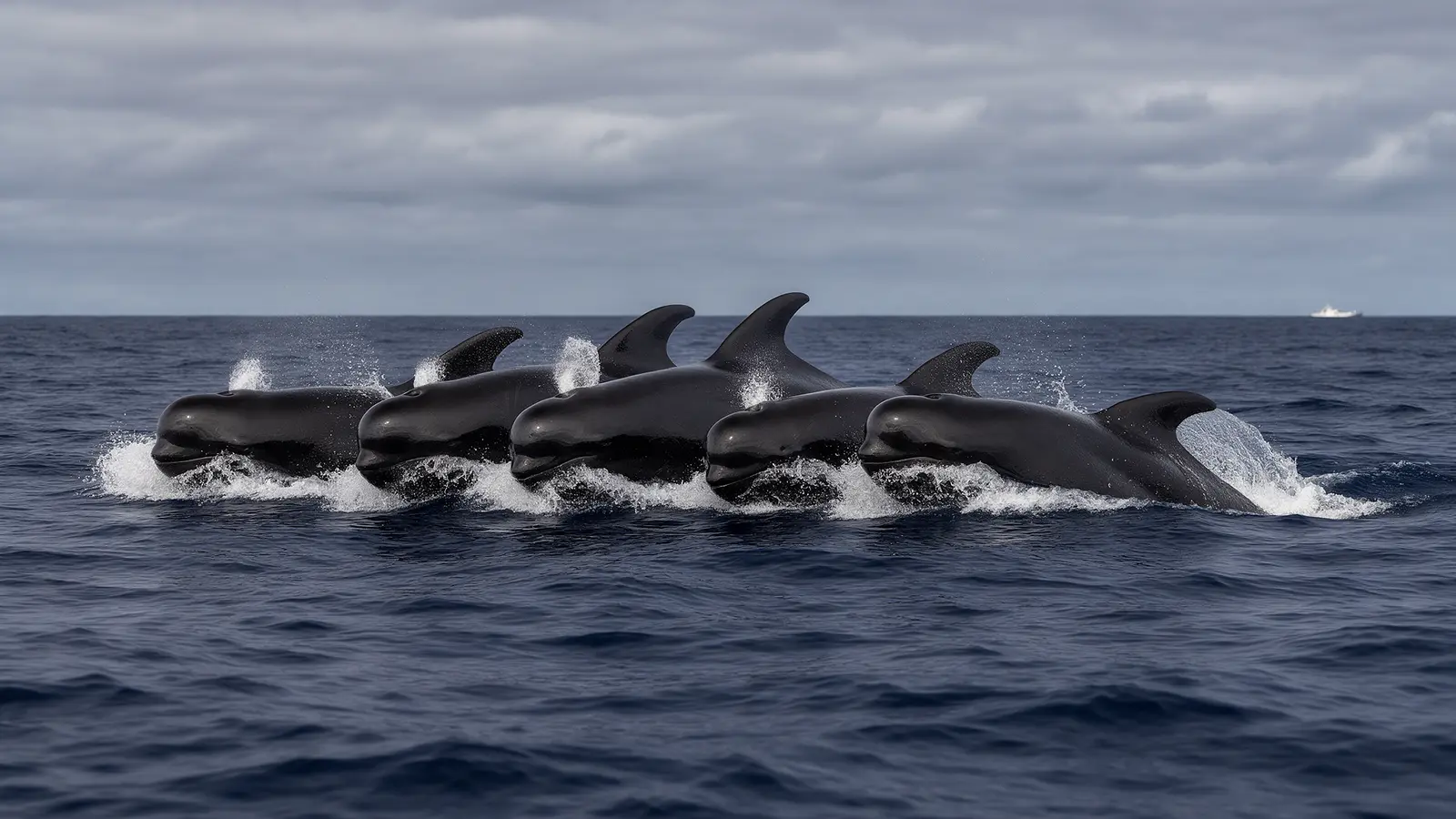
- Long-finned pilot whale (Globicephala melas), regularly seen on trips from Hendaye.
- Risso’s dolphin and harbour porpoise are also found in the bay.
The large cetaceans (rarer)
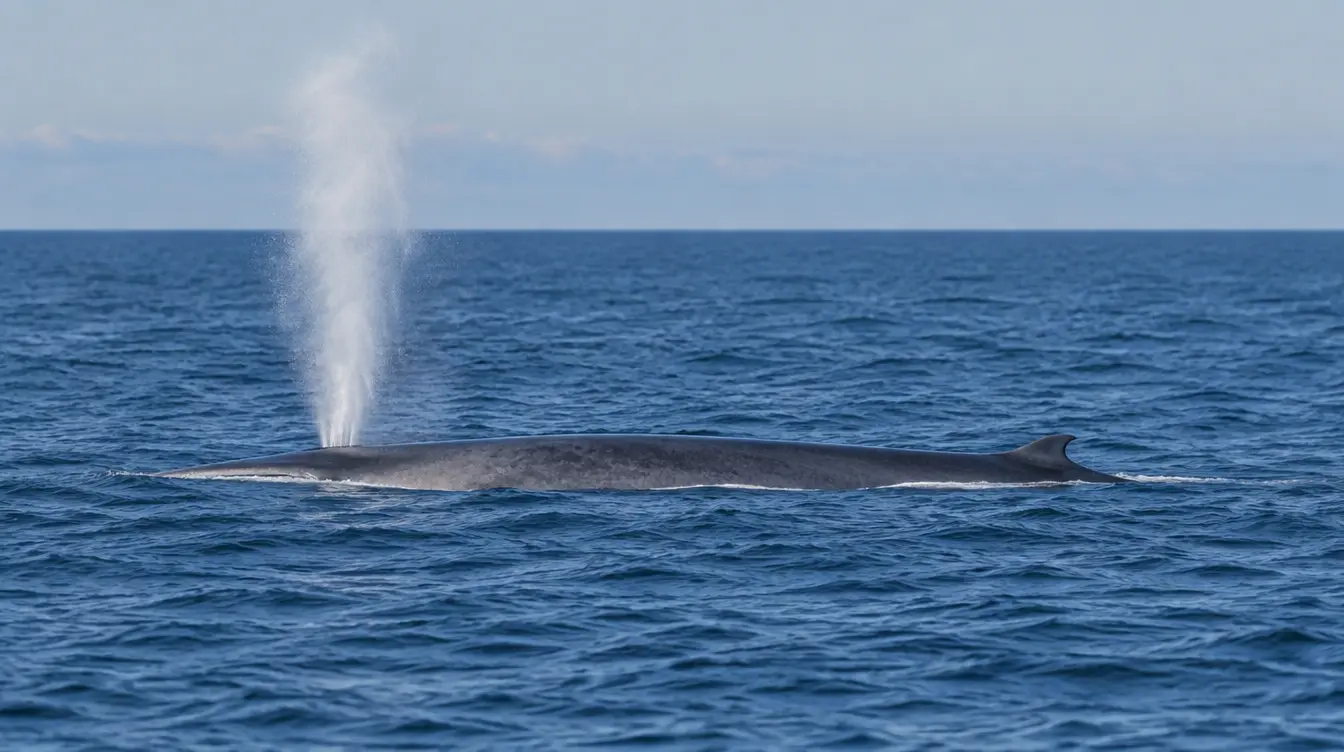
- Fin whale (Balaenoptera physalus) — the second-largest living mammal after the blue whale: 19 to 20 m on average, weighing 40 to 50 tonnes.
- Minke whale (Balaenoptera acutorostrata) — 7 to 10 m as an adult; its dives usually last 3 to 8 minutes.
- Sperm whale (Physeter macrocephalus) — males measure 15 to 18 m and weigh 45 to 70 tonnes. It regularly dives to around 1,100 m, and as deep as 2,500 m, and can hold its breath for up to an hour. Its blowhole is on the left side of its head.
- Beaked whales — Cuvier’s beaked whale, Sowerby’s beaked whale and the northern bottlenose whale are among the species found in the bay. Humpback whales, orcas and even blue whales are occasionally reported.
Other large marine animals
- Basking shark — the second-largest fish in the world after the whale shark (up to 12 m). It feeds almost exclusively on plankton and is harmless to humans.
- Blue sharks and ocean sunfish also live in the bay.
- Leatherback turtle — the largest turtle in the world: a shell of about 1.50 m and 400 kg on average in the Atlantic.
The Basques, great whale hunters
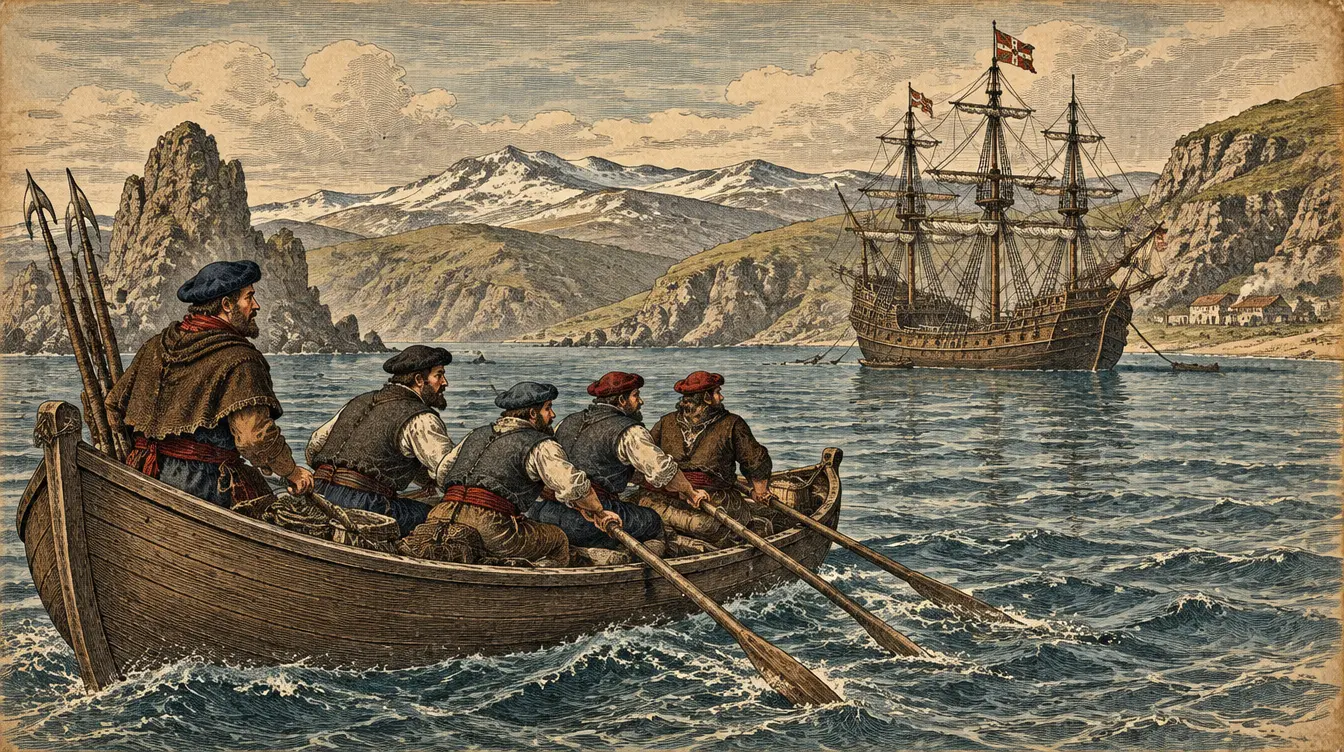
The sea and whales are part of Basque history. In the 16th century, Basque whalers crossed the Atlantic as far as Newfoundland. The San Juan, built in Pasaia (Gipuzkoa), sank in 1565 at Red Bay, in Canada; its wreck was discovered in 1978 by Parks Canada. In Pasaia, the Albaola foundation is building a replica of this whaling ship, a project supported by UNESCO.
Today, people watch whales… in order to protect them.
How to prepare
Kit
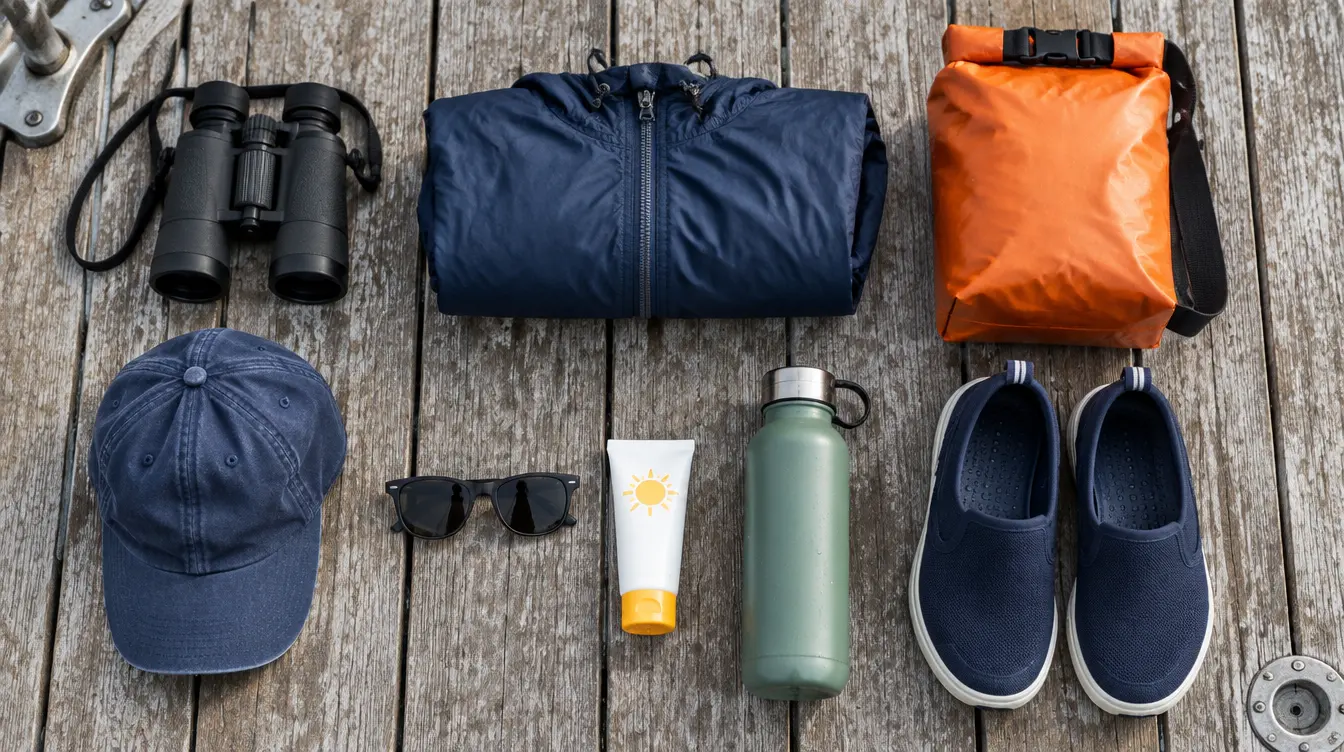
- Warm clothes and a waterproof windcheater: it’s often chilly out at sea, even in summer
- Cap, sunglasses and sun cream
- Closed, non-slip shoes
- Dry bag for your camera and phone
- Binoculars
- Snacks and water
Keep your eyes peeled
Watch for a blow on the horizon, swirls on the surface or seabirds diving: these are often signs that cetaceans are around. The large cetaceans dive for a long time, so stay alert.
Watching without disturbing
- Keep your distance from the animals
- Slow down as you approach
- Never chase a group or cut across its path
- Don’t feed, touch or swim with cetaceans
- Choose a committed operator (charter, certification): be wary of fast approaches and high-speed chases
Frequently asked questions
Am I sure to see cetaceans?
No: sightings are never guaranteed — it’s the sea.
Do I need to be able to swim?
No, you stay on the boat and don’t go into the water.
Can I bring children?
It depends on the operator: Explore Océan’s expedition is open to children from age 5, and the classic route from Bermeo is described as suitable for families. That said, a long trip at sea can be tiring for younger children.
What camera gear should I bring?
A telephoto lens is ideal for distant animals, and protection against sea spray is essential. No zoom? Just enjoy the show.
Can I swim with the dolphins?
No: responsible operators don’t offer this. Watching is done from a distance.
More on dry land
- The Biarritz Aquarium showcases the wildlife of the Bay of Biscay, and the Cité de l’Océan explains the ocean: see the Basque Country with children.
- The San Sebastián Aquarium and its underwater tunnel.
- All the Basque Country’s wildlife: wildlife and plants.
Sources
- Wikipedia (French) — Bay of Biscay
- Turismo Euskadi — Where to see whales and dolphins on the Basque coast (in Spanish)
- Explore Océan — Cetacean expedition (in French); Verballenas
- Wikipedia (French): Sperm whale, Fin whale, Minke whale, Leatherback turtle, Basking shark
- Cité de l’Océan — The San Juan, the legendary Basque whaling ship (in French)
Ondo pasa itsasoan — Enjoy your time at sea.