
Food & wine
Txakoli: everything you need to know about the Basque Country’s lightly sparkling wine
Txakoli guide: the 3 PDOs (Getaria, Biscay, Álava), grape varieties, the high pour, food pairings, producers and where to taste it.
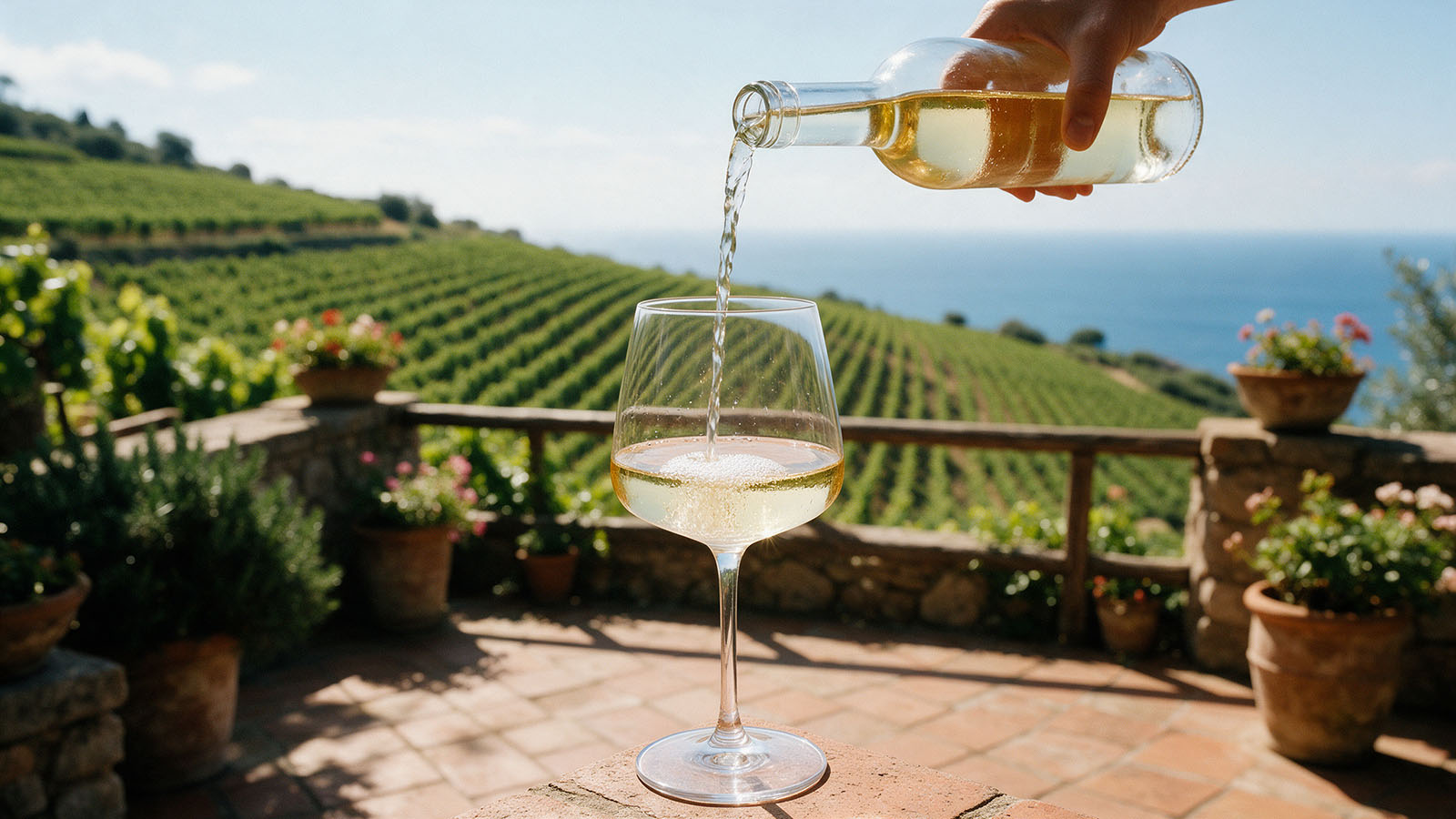
It is pronounced ‘cha-ko-lee’ and served poured from a height, stuntman-style. Txakoli is the emblematic white wine of the Spanish Basque Country (Hegoalde) — a very dry, lightly sparkling wine with lively acidity. Here is everything you need to understand it, choose it and enjoy it.
Origins and etymology
The word comes from the Basque txakolin, whose exact origin remains unknown. It is recorded in Spanish (vino chacolín) in a document dating from 1520. Until the 1980s, txakoli was mostly a homemade wine.
As early as 1397, the first ordinances of the province of Gipuzkoa, approved at an assembly held in Getaria, were already protecting the vines.
By the 1980s, only around 21 hectares of vineyards remained in the Getaria and Zarautz area. The revival came through designation of origin status: three designations were created between 1989 and 2001.
The 3 txakoli PDOs
Getariako Txakolina (Getaria) — the oldest
A designation since 1989, the first of the three. Vineyards around Getaria and Zarautz, with a small share around Aia.
- Grape varieties: hondarrabi zuri (white, the majority), hondarrabi beltza (red)
Producers: Txomin Etxaniz, Gaintza, Ameztoi.
Bizkaiko Txakolina (Biscay)
A designation since 1994. It covers several districts (comarcas) of Biscay (Bizkaia), notably Uribe-Kosta and Busturialdea, but also the Encartaciones, the Duranguesado and Lea-Artibai.
- Grape varieties: mainly hondarrabi zuri and hondarrabi beltza; other permitted varieties include mune mahatsa, izkiriota (Gros Manseng), Sauvignon Blanc, Riesling and Chardonnay
- Production: white accounts for 85–90% of production; the traditional rosé is called ojo de gallo
Producers: Berroja, Doniene Gorrondona, Itsasmendi.
Arabako Txakolina (Álava) — the smallest
A designation since 2001. Around a hundred hectares (99 ha in 2020) in northern Álava (Araba): Amurrio, Artziniega, Aiara/Ayala, Laudio/Llodio and Okondo.
- Grape varieties: mainly hondarrabi zuri and hondarrabi beltza; other permitted varieties include hondarrabi zuri zerratia (Petit Courbu), izkiriota (Gros Manseng) and izkiriota ttippia (Petit Manseng)
Producers: Beldui (Laudio/Llodio), Artomaña (Xarmant cuvée).
The txakoli style
A very dry, lightly sparkling white wine with high acidity, usually between 9.5% and 11.5% ABV. It is drunk within a year of bottling.
Serving — poured from a height
Food and wine pairings
Txakoli shines alongside classic Basque produce:
- White fish grilled over charcoal (turbot, sea bass, sea bream)
- Marinated anchovies
- Pintxos
- Hake kokotxas al pil-pil
- Iberian ham or Bayonne ham
- Fresh sheep’s cheese
- Chipirones en su tinta
- Grilled prawns
- Warm salad
Best avoided: red meat, heavy stews, sweet desserts.
Where to taste it at the source
Getaria (the classic trail)
Several wineries (bodegas) in the designation offer tours, including Txomin Etxaniz and Gaintza. See our Getaria guide.
Zarautz
Several producers around the town. See our Zarautz guide.
Biscay — Urdaibai
The Berroja winery, in Muxika, within the Urdaibai Biosphere Reserve, offers tours. In Guernica (Gernika-Lumo), the Itsasmendi winery also welcomes visitors.
Álava — the Ayala valley
Producers in Aiaraldea (Aiara, Laudio/Llodio…). See our Amurrio guide.
How to serve it at home
- Open the bottle just before serving
- Pour from a height, as tradition demands
- Drink it young, within the year
Frequently asked questions
Can you age txakoli?
Traditionally, no: it is drunk within a year of bottling.
Are there rosé or red txakolis?
Yes. In Biscay, the traditional rosé (ojo de gallo) contains at least 50% hondarrabi beltza; white still accounts for the vast majority (85–90% of production). In Getaria, Ameztoi’s Rubentis rosé is well known on export markets.
Is txakoli a sweet wine?
No, it is a very dry wine with high acidity.
Useful links
Topa! — Cheers!